Decades of Expertise Refining Critical Minerals
Turning ore, brine, and recycled feedstocks into high-purity, market-ready product
Everyone talks about mining critical minerals. The harder problem is refining them. Turning a mineral-bearing brine or leachate into battery-grade product takes precise separation and purification, and that is exactly the step where supply chains are scrambling to build capacity. Demand for lithium, nickel, cobalt, manganese, tungsten, and rare earths keeps climbing, and so does the need for equipment that hits those purity specs reliably and at full scale.
Crystallization Is the Critical Step
Crystallization and evaporation are how a dissolved mineral becomes a solid, sellable product. Control how the crystal forms and grows, and you get the large, uniform, high-purity crystals that battery and magnet producers require. Lose control of it, and you get a low-value concentrate that has to be reprocessed. For most critical minerals, that control is the whole game.
Critical Minerals Are New. The Process Behind Them Is Not.
Swenson has been building evaporation and crystallization systems for more than 140 years, refining salts, chemicals, and minerals into high-purity products long before anyone called them “critical.” The hard parts of today’s supply chain are the parts we know cold: managing difficult chemistries, holding tight purity specs, and taking a bench result all the way to a running commercial plant. What has changed is the material. The engineering has not.
The Minerals We Refine
Our systems refine a wide range of critical minerals and the byproducts that come with them
Lithium
Lithium carbonate, lithium hydroxide, lithium chloride, and lithium sulfate for battery production
Nickel, Cobalt & Manganese
High-purity sulfate solutions engineered for cathode precursor materials
Rare Earths
Refined salts, oxides, and carbonates for permanent magnets, defense, and electronics.
Tungsten
High-purity tungsten compounds for specialty materials and advanced manufacturing
No Two Feed Streams Are Alike
A lithium brine, a DLE eluate, a hard-rock leachate, and recycled black mass each carry a different set of impurities, and each one needs its own design. This is where experience earns its keep. Get the chemistry and thermodynamics right up front and you reach spec; miss something, and the problems tend to surface during commissioning, when they are expensive to fix.
What a Swenson System Delivers
With a Swenson system, you can:
Recover high-purity product that meets your target specifications
Strip out contaminants efficiently
Maximize yield without burning excess energy
Prove the process before you commit capital
From Concept to Commercial Scale
Every project starts with the chemistry and the economics. From there it follows a well-worn path: develop the process and flowsheet, run pilot tests to generate the data your commercial plant is designed around, engineer the plant and equipment, and stay with you through startup. The equipment follows the mineral. Lithium carbonate might call for a draft-tube-baffle crystallizer to grow large, uniform crystals. A high-capacity stream prone to scaling might call for forced circulation. Where energy cost drives the economics, mechanical vapor recompression or multiple-effect designs bring it down.
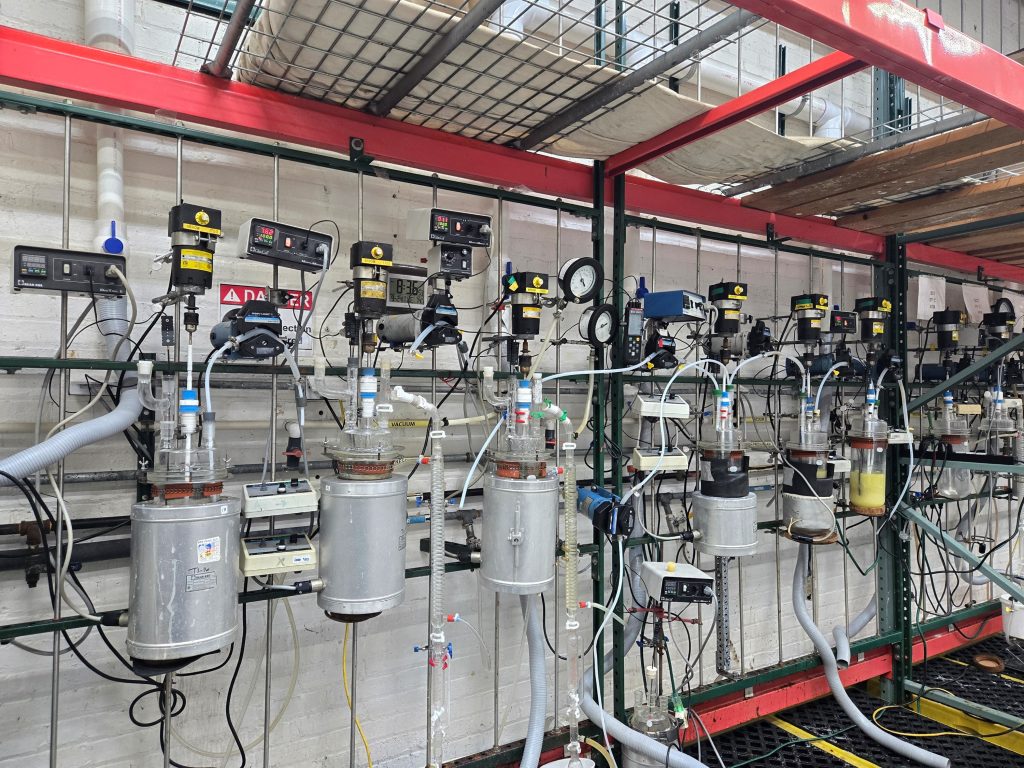
Proof, Before You Build
At our Test Center in Harvey, Illinois, we have run more than 700 different compounds through bench and pilot programs. Pair that with our own simulation and design tools, and we can prove your process works before you buy a single piece of equipment.